
Estimated reading time: 7 minutes
Key Takeaways
- Many Americans struggle with gastrointestinal issues despite a desire for healthy eating, highlighting the importance of gut health.
- The gut microbiome influences overall health and can be affected by diet, age, and genetics.
- Prebiotics and probiotics support gut health by promoting beneficial microbial balance, while postbiotics provide benefits without live microorganisms.
- Verb Biotics has developed Keystone Postbiotic, a product that utilizes fermented oats to enhance gut microbiome diversity and health.
Many people like to kick off the New Year with a list of resolutions to enhance their lives. A 2019 study reported that in the US, the top three New Year resolutions are healthy eating, exercise, and weight loss.1 Despite the mass desire for a healthy lifestyle, every year 60-70 million Americans suffer from gastrointestinal (GI) issues. These issues range from a casual “upset stomach” to chronic conditions such as gas, bloating, ulcers, irritable bowel syndrome (IBS), and more.
According to a customer survey by Verb Biotics in 2023, most individuals try to alleviate digestive issues by following various home remedies. For example, they drink water, take antacids, or eat more fiber.2 Although not everybody needs to consult with a physician for gut issues, the annual total number of hospitalizations is quite high. Specifically, 4.5 million hospital visits and 236,000 mortality cases, resulting in medical bills reaching near $100 billion!3,4
Amidst the COVID-19 pandemic, the focus on 'healthy eating for gut health' surged. This trend catapulted the social media hashtag '#GutTok' to over a billion views. These figures show consumer curiosity surrounding dietary habits and gut health. When it comes to and probiotics, decades of research have consistently shown that maintaining a healthy gut is essential for overall well-being and gut health.
The Gut Microbiome
The concept of microorganisms living in the gut, also known as the gut microbiome, was initiated in the late 1800s after the discovery of E. coli bacterium in human feces.5 At the beginning of the 2000s, NIH’s human microbiome project (HMP) added a new vigor to gut microbiome research.6
The knowledge gained from their gut microbiome research changes our understanding of overall human health in relation to the gut. For example, we now know that human babies inherit their first microbiome from the mother during birth. This microbiome plays a crucial role in their developmental well-being.
We also learned that a healthy balance in the gut microbial population is not only important for digestive health, but also for our cardiac, endocrine, mental, autoimmune health, and more. The microbial composition and diversity of our gut microbiomes are heavily influenced by food, age, and genetics. Other influences include immune systems, environmental factors, geographic location, personal habits (e.g., smoking and drinking), and medications.7
All these factors work concertedly. They build an environment to harbor thousands of species of bacteria, viruses, fungi, and parasites in the gut.
The abundance of specific microorganisms in the gut is constantly changing due to the interplay of the above-mentioned factors. If one factor has a drastic change, it disrupts the microbial balance and causes what many scientists call “dysbiosis”. We must modulate the contributing factors to revert the microbiome to a healthy state. Some of the factors are difficult to change, whereas some are easy. For example, we cannot change our age or genetics, but we can control what we eat. Fortunately, the gut microbiome is most directly regulated by our diet. A healthy, balanced diet can keep our microbiome in good shape. Historically, a healthy diet is perceived to be low in calories, low in processed sugars, and rich in fiber.8
The Science of Digestion
Thanks to advancing technology, scientists can now molecularly dissect food components to clearly understand their mode of action (MOA). This understanding helps them discover how to maximize their benefits. Food digestion begins in the mouth with the mixing of saliva. It continues in the gut with the help of various digestive enzymes through a complex physiological process.
However, human enzymes are incapable of digesting many complex food components, which are collectively referred to as “prebiotics”. The microbial community in our gut uses special enzymatic power to ferment those prebiotics and supply metabolites to the gut. Therefore, the molecular and structural complexity of these prebiotics determines which group of gut bacteria will come into action.
There are three major classes of gut microbes for these actions: probiotics, commensals, and pathogens. Probiotic bacteria are the major beneficial players in gut homeostasis. Different species of probiotics utilize different prebiotic components of food.
Prebiotics
For example, Inulin is a prebiotic found in foods like asparagus. It is fermented by Bifidobacterium, Lactobacillus, and Faecalibacterium (a few examples of gut probiotic bacteria.) The fermentation process in the colon yields a series of metabolites, specifically short-chain fatty acids (SCFA). So, in turn, these provide energy to intestinal cells.9
On the other hand, there are numerous species of gut microorganisms whose impact on prebiotic fermentation is yet to be elucidated. Still, their presence and diversity help the immune system. They compete for the available nourishments and prevent pathogen invasion.
Simultaneously, a portion of gut microbes are real pathogens. In a balanced gut ecosystem, they are outnumbered by the probiotic and commensal microbes. Hence, they cause minimal issues.10 However, if a diet is high in readily digestible starch, such as processed carbs and sugars, it is quickly digested into glucose by the body’s enzymes and absorbed in the blood.
Eating processed foods that are low in fiber and high in sugar reduces the probiotic bacteria in the gut. This reduction causes bad groups of bacteria to flourish and contribute to issues like diabetes and obesity.11
Postbiotics
Postbiotics are a relatively new innovation in the biotics space. They can greatly assist in enhancing gut microbiome diversity. Although the term may be unknown to many, but postbiotics are based on the age-old fermentation concept. Postbiotics do not contain any live microorganisms, making them safer for many people to consume. The gut environment uniquely varies from person to person. Hence, everybody may not get the same benefit from prebiotic food and probiotic supplements. In fact, in a few cases, excessive fermentation in the gut may stimulate the growth of gas-producing microorganisms, e.g., Clostridium spp., leading to bloating.12 However, a postbiotic is already fermented with a specific probiotic bacterium and later pasteurized to inactivate the bacteria. Therefore, it provides similar benefits to its prebiotics and probiotics counterparts without their possible disadvantages.
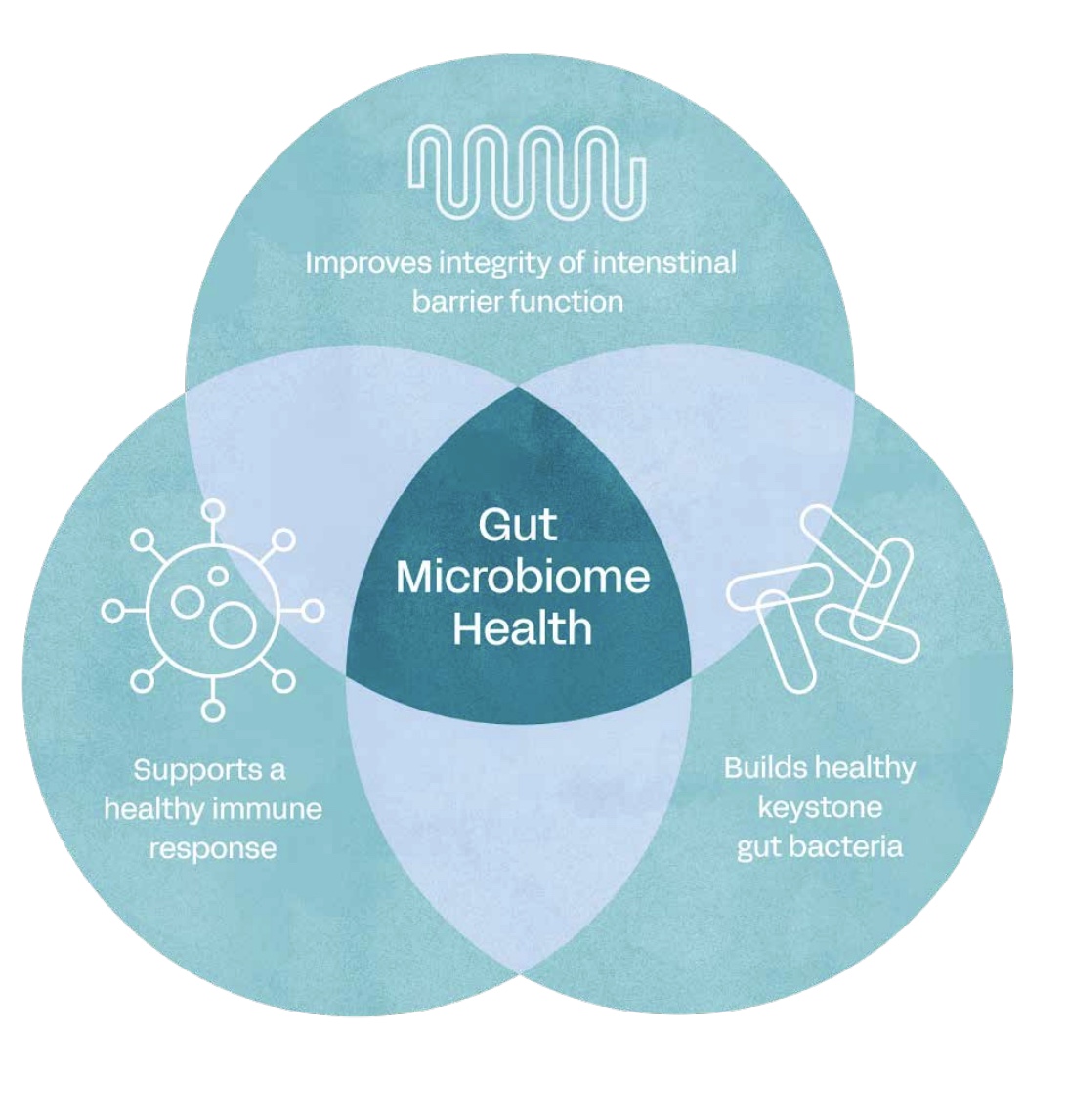
Utilizing the concept of prebiotic and probiotic synergy, Verb Biotics has created our first bio-solution, Keystone Postbiotic, using oat powder to support cultivating a healthy gut microbiome. Oats are naturally gluten-free and have prebiotic components, such as β-glucan, protein, vitamin E, lysin, flavonoids, and phenolics.
In our lab, we carefully formulated and tested multiple fermentation conditions. We changed the oat amount, pH, and temperature to ensure the optimum growth condition for the two fermenting Lactobacillus strains. Lactobacilli are well known for their ability to bio-transform various prebiotics under the right growth conditions.
Therefore, we utilized the combined power of two Lactobacillus to bio-convert the indigestible parts of oat powder into metabolites that humans can readily utilize. The experimental findings were strongly supported by the data from a small cohort of people who were on Keystone Postbiotic. Verb is excited to see Keystone Postbiotic get used in commercialized applications to help consumers say, “I feel the effect!”
About the author: Arpita Aditya, Ph.D., has been studying and researching microbiology for over 14 years. She has expertise in gut microbial modulation utilizing natural components to provide host health benefits. Her research interests include investigating the mode of action of probiotics against human health complications. Currently, she works as a Senior Scientist at Verb Biotics.
Sources
(1) Infographic: The Top New Year’s Resolutions For 2019. Statista Daily Data. https://www.statista.com/chart/16500/top-us-new-years-resolutions (accessed 2024-04-30).
(2) 2023 Consumer Gut Health Survey Highlights Need to Educate Consumers on the Gut Microbiome. Verb Biotics. https://verbbiotics.com/2023-u-s-consumer-gut-health-survey-highlights-need-to-educate-consumers-on-the-gut-microbiome-for-overall-health/ (accessed 2024-04-03).
(3) RD, E. Q. 8 Gut Health Statistics and Facts [2023 Update]. Health Reporter. https://healthreporter.com/gut-health-statistics-and-facts/ (accessed 2024-05-01).
(4) Digestive Diseases Statistics for the United States - NIDDK. National Institute of Diabetes and Digestive and Kidney Diseases. https://www.niddk.nih.gov/health-information/health-statistics/digestive-diseases (accessed 2024-05-01).
(5) Farré-Maduell, E.; Casals-Pascual, C. The Origins of Gut Microbiome Research in Europe: From Escherich to Nissle. Human Microbiome Journal 2019, 14, 100065. https://doi.org/10.1016/j.humic.2019.100065.
(6) NIH Launches Human Microbiome Project. National Institutes of Health (NIH). https://www.nih.gov/news-events/news-releases/nih-launches-human-microbiome-project (accessed 2024-05-02).
(7) Bajinka, O.; Darboe, A.; Tan, Y.; Abdelhalim, K. A.; Cham, L. B. Gut Microbiota and the Human Gut Physiological Changes. Annals of Microbiology 2020, 70 (1), 65. https://doi.org/10.1186/s13213-020-01608-2.
(8) Solan, M. Why is eating healthy so hard?. Harvard Health. https://www.health.harvard.edu/nutrition/why-is-eating-healthy-so-hard (accessed 2024-04-30).
(9) Sheng, W.; Ji, G.; Zhang, L. Immunomodulatory Effects of Inulin and Its Intestinal Metabolites. Front Immunol 2023, 14, 1224092. https://doi.org/10.3389/fimmu.2023.1224092.
(10) Khan, R.; Petersen, F. C.; Shekhar, S. Commensal Bacteria: An Emerging Player in Defense Against Respiratory Pathogens. Front Immunol 2019, 10, 1203. https://doi.org/10.3389/fimmu.2019.01203.
(11) Magee, E.; RD; MPH. Junk-Food Facts. WebMD. https://www.webmd.com/diet/features/junk-food-facts (accessed 2024-05-09).
(12) A Brief History of Fermentation | PDF | Fermentation | Louis Pasteur. Scribd. https://www.scribd.com/document/59190558/A-Brief-History-of-Fermentation (accessed 2024-05-02).